Why Winter Is the Worst Time to Ignore Your Exterior Surfaces

Most people think of exterior cleaning as a spring and summer job. The logic seems sound: clean weather, longer days, things dry quickly. Winter is when you put the garden furniture away, close the shed, and stop thinking about the patio until April.
The problem with this logic is that your exterior surfaces don't stop changing in winter. They're just changing in ways you can't easily see, and in a direction that makes everything harder and more expensive to fix in spring.
This isn't an argument for cleaning your driveway in December. It's an argument for understanding what's happening to it, knowing what's worth attending to now, and arriving at spring in a position to deal with it properly rather than discovering six months' worth of accumulated damage all at once.
Winter Is Active Damage Season, Not a Neutral Pause
The idea that surfaces are static in winter is the central misconception. Cold, wet, low-light conditions are not neutral for porous exterior surfaces, they're some of the most damaging conditions those surfaces face all year.
Freeze-Thaw Damage
Water expands by approximately 9% when it freezes. Porous surfaces such as stone, concrete, block paving, brick and render absorb water. When that absorbed water freezes, it exerts pressure on the pore walls from within. A single freeze-thaw cycle causes micro-fractures. Dozens of cycles over a winter progressively enlarge those fractures, weakening the surface structure and creating larger pores that absorb more water in the next wet spell.
The surfaces most affected are the most porous: Unsealed natural stone, older concrete, porous sandstone, rough-textured block paving. A surface that's been sealed, with a penetrating sealer that fills the pores rather than a surface film, is significantly more resistant to freeze-thaw damage because there's less water in the pore structure to freeze.
This is one of the most concrete arguments for sealing before winter rather than in spring: the freeze-thaw damage that accumulates between October and March is damage that wouldn't happen to a sealed surface.
Biological Growth Continuing in Milder Spells
Mould and algae don't simply die in winter. They slow down, their metabolic rate drops with temperature, but they continue to grow in the mild, damp spells that characterise a typical UK winter. A green algae film that was barely visible in October can be a well-established layer by March, particularly on north-facing or shaded surfaces that see minimal UV exposure.
More significantly, mould and algae retain moisture against the surface beneath them. A biological film acts as a sponge, holding water in contact with porous material through dry spells that would otherwise allow some drying out. This amplifies both biological damage (the organisms produce organic acids that slowly etch stone and concrete) and freeze-thaw damage (more moisture in the surface when temperatures drop).
Leaf Staining Embedding Over Multiple Freeze-Thaw Cycles
Wet leaves on paving leach tannins which are natural compounds that penetrate porous surfaces and oxidise into a dark, chemically bonded stain. This process continues slowly through cold weather. But the freeze-thaw mechanism makes it significantly worse: tannin solution that has penetrated into surface pores gets driven deeper with each freeze cycle, as expanding ice forces the liquid further into the material.
A leaf stain from October that's been through a UK winter is typically significantly deeper, and harder to remove, than the same stain treated promptly in October before the first frost. See our separate guide on leaf staining for the full detail on this.
Drainage Problems Going Unnoticed
Winter is when drainage matters most and when problems are least likely to be noticed. A blocked patio drain, a low point in the paving where water pools, or a cracked or displaced edging that directs water toward the house are problems that develop through the year and manifest in winter as standing water, saturated ground, or water tracking toward building foundations.
Standing water on hard surfaces accelerates biological growth, freeze-thaw damage, and staining simultaneously. A quick check of how water flows across your paved surfaces after heavy rain takes ten minutes and can identify problems worth addressing before they become more serious.
What You Should Actually Do in Winter
This is a practical section, not a counsel of perfection. Most exterior surface work is correctly deferred to spring. But a few things are worth doing, or at least worth checking, through winter.
Remove Leaves Promptly
This is the single highest-impact thing you can do through November and December, and it costs nothing except time. Leaves left in contact with paving for days or weeks in wet conditions cause staining that may require professional treatment to fully address in spring. Clear them regularly, pay attention to corners and areas under furniture where leaves accumulate, and keep drains clear.
Check for Standing Water After Heavy Rain
After a significant rain event, walk your paved areas and note where water is pooling. Some standing water is inevitable, but persistent pooling in the same location suggests a drainage problem worth investigating before it causes more serious issues. Surface water tracking toward the house or into garage spaces warrants attention.
Deal With Visible Biological Growth on Above-Ground Surfaces
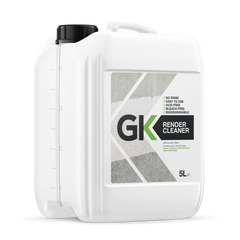
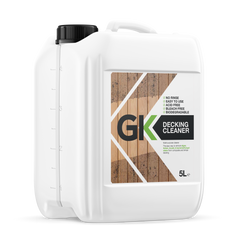
Render, painted masonry, timber, and other vertical or above-ground surfaces continue to be treatable through milder winter periods, provided air and surface temperatures are consistently above 8°C when you apply the product. If green algae or black mould is visibly spreading across a rendered wall or timber surface through winter, treating it rather than waiting until spring is worth doing. GK Render Cleaner and GK Decking Cleaner are both viable above 8°C.
Check Product Storage
If you have exterior cleaning products in an outdoor shed or garage, check that water-based sealers such as stone sealer, wood sealer and anti-mould paint haven't been exposed to freezing temperatures. These are emulsion products that are permanently destroyed by a single freeze. If you're not sure, check the consistency: a sealer that's been frozen will show separation, graining, or a curd-like texture rather than a uniform milky liquid. See our guide to chemical storage over winter for full details.
What to Leave Until Spring
Being honest about what not to do in winter is as important as knowing what to act on. Attempting certain work in unsuitable conditions produces results that are worse than waiting.
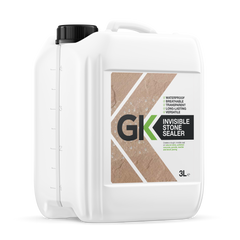
Sealing hard surfaces: GK Invisible Stone Sealer requires a minimum of 10°C for both air and surface temperature, and needs dry conditions for at least 24 hours after application. Across most of the UK from November through to March, reliable sealing conditions are rare. Wait for April, when temperatures are consistently above the threshold and surfaces dry between rain events.
Full driveway and patio treatments: Biocidal cleaners work above 8°C, but results are slower in cold conditions and reliable drying between wet weather events is limited in winter. Unless biological growth is severe and there's a mild spell forecast, deferring full hard surface treatments until March or April is the practical choice. You'll get faster results, better post-treatment drying, and the option to seal in the same visit.
Any treatment requiring extended dry time: Products that need to dwell, penetrate, and dry without being washed off by rain are difficult to use reliably in winter conditions. Check forecast windows carefully, and when in doubt, wait.
The Cost of Doing Nothing: What Spring Looks Like Without Winter Attention
It's worth being concrete about what the difference looks like in practice between a surface that's been minimally attended through winter and one that's been left entirely.
A minimally attended surface with leaves cleared regularly, visible growth on walls treated in mild spells and drainage checked, arrives in spring needing a standard treatment: apply biocide, rinse when dead material has cleared, seal. A day's work, manageable cost, predictable result.
A neglected surface with leaves left through the winter, biological growth unchecked, and drainage issues unaddressed, arrives in spring with a more complex picture: deep tannin staining that requires concentrated treatment and may need professional attention; established biological growth including possible lichen that requires extended treatment; potential freeze-thaw damage to the surface structure that changes what products are appropriate; drainage issues that need addressing before surface treatment makes sense.
None of this is catastrophic. Exterior surfaces are resilient, and even a heavily neglected surface can be restored with the right approach and products. But the work is more involved, the cost is higher, and in some cases such as severe lichen on natural stone or significant freeze-thaw damage to soft sandstone, the surface has changed in ways that affect what restoration is possible.
The winter maintenance argument isn't "clean your patio in January." It's "clear the leaves, deal with what you can, and don't let six months of avoidable damage accumulate."
The One Practical Thing You Can Do Right Now
If you do one thing after reading this, make it this: walk your paved areas and hard surfaces and assess the condition before winter fully sets in.
Note where leaves are accumulating and not being cleared. Note where biological growth is visible: green algae on paths, black spots on paving, green film on render or fencing. Note where water pools or drains slowly. Note whether any of your exterior cleaning products are stored somewhere that might reach freezing temperatures overnight.
This takes fifteen minutes, it costs nothing, and it gives you a clear picture of what needs attention now (leaves, product storage, mild-condition surface treatments) and what to plan for in spring (full surface treatments, sealing, any structural drainage issues).
An exterior surface that arrives in spring having been monitored through winter is a significantly easier and cheaper problem than one that hasn't been looked at since September.
Frequently Asked Questions
Can I clean my patio in winter?
It depends on the product and the conditions. GK's biocidal exterior cleaners require a minimum application temperature of 8°C. In mild spells this is achievable in November and December in southern England, though results are slower than in warmer conditions. Sealing requires 10°C minimum and is generally not advisable from late November through to March. For most hard surface work, waiting for consistent temperatures above 8°C in spring is the practical recommendation.
Is biological growth on my patio worse in winter?
Visible growth slows in cold conditions but doesn't stop entirely. More significantly, biological films already present through autumn and winter retain moisture against the surface, amplifying freeze-thaw damage and creating conditions for deeper biological penetration into the material. An algal film in winter is doing more damage than it looks like it's doing.
How do I know if my patio has been damaged by frost?
Freeze-thaw damage to paving shows as surface spalling; small flakes or chips breaking away from the surface, or as a roughening and pitting of the surface texture that wasn't there before. Soft natural stone (some sandstones, limestone) is most vulnerable. Dense concrete and porcelain are most resistant. If you notice a change in surface texture after a cold spell, assess it in spring before treating as the approach may need to change depending on the extent of the damage.
Does sealing really protect against winter damage?
Yes, in a meaningful way. A penetrating sealer fills the surface pores with a water-repellent compound, reducing the amount of water the surface absorbs. Less absorbed water means less pressure during freeze-thaw cycles, less biological moisture retention, and less tannin penetration from leaf staining. Sealing doesn't make surfaces invulnerable to winter conditions, but it substantially reduces the rate of damage. This is one of the strongest arguments for sealing in autumn rather than spring as the protection applies immediately, through the worst damage season of the year.
What should I do if I find significant damage in spring?
Assess the surface and get advice before treating. Some surface damage changes what products are appropriate; a heavily freeze-thaw damaged porous stone may need a different approach than an intact surface. The GK team at sales@gkproductsuk.com or 07557 111 297 can advise on the right approach for specific surfaces and conditions. For significant structural damage such as cracking, significant spalling or uneven settlement, a surface specialist or paving contractor should assess the structural condition before any cleaning treatment is applied.
Summary
Questions about maintaining your exterior surfaces through winter? Contact the GK team at sales@gkproductsuk.com or call 07557 111 297.
Products mentioned in this article