


How to Clean Away Rust: The Complete 2026 Guide to Removing Rust Stains from Patios, Driveways, Stone & Mineral-Based Substrates
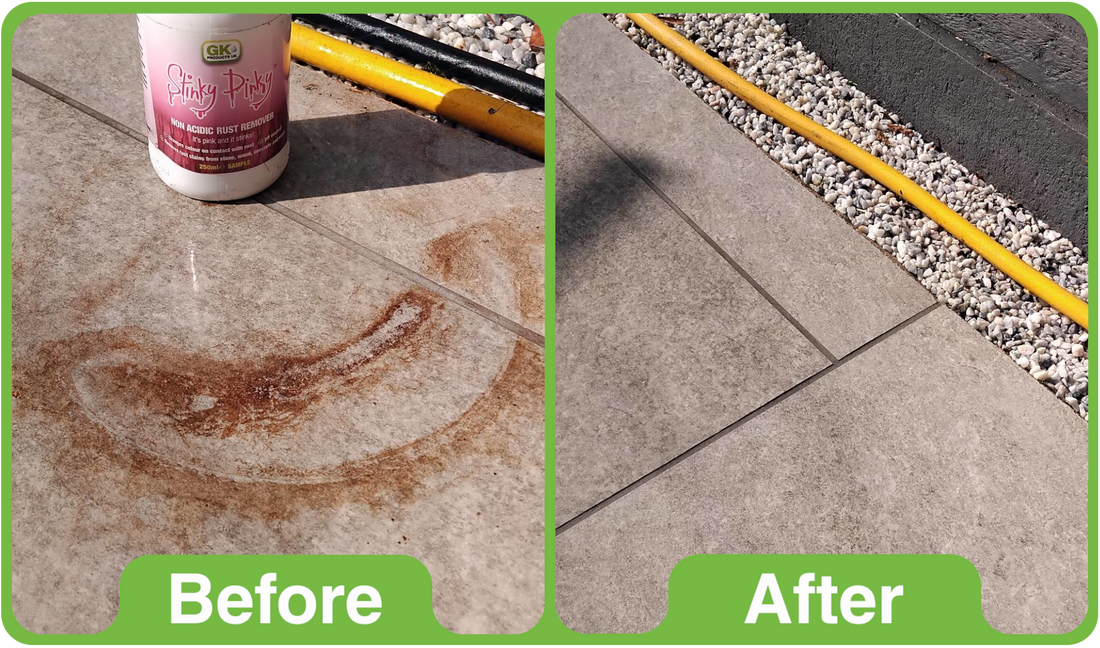
Rust stains ruin the appearance of patios, driveways, stone surfaces, and masonry throughout your property. Those stubborn orange-brown marks seem impossible to remove, resisting standard cleaning methods and often worsening with attempted treatment.
Whether you're dealing with rust staining from metal garden furniture, fertiliser residue, iron-rich groundwater, or corroded fixings, this comprehensive guide explains exactly how to clean away rust effectively using proven methods, from understanding what causes rust staining to applying professional-grade treatments that eliminate even the most stubborn discolouration.
Understanding Rust Stains: What Causes Them and Why They're So Stubborn
Before tackling rust removal, understanding the chemistry behind rust staining explains why conventional cleaning fails and why specialist products succeed.
The Chemistry of Rust Formation
Rust is iron oxide, the product of iron reacting with oxygen in the presence of water or moisture. This oxidation process creates various iron oxide compounds that bond chemically with porous surfaces like stone, concrete, brick, and render.
What happens when iron-containing materials contact your patio or driveway?
Initial Contact: Iron particles from metal furniture legs, tools, fertiliser, or groundwater deposit on the surface.
Moisture Activation: Rain, dew, or irrigation water provides the moisture needed for oxidation to begin.
Oxidation Process: Iron reacts with oxygen, forming iron oxide (rust) that immediately begins staining the surface.
Chemical Bonding: Rust compounds don't just sit on surfaces, they bond chemically with porous materials, penetrating into the stone or concrete matrix.
Progressive Penetration: Over time, rust staining migrates deeper into porous substrates, making removal increasingly difficult.
This chemical bonding explains why scrubbing, pressure washing, or standard cleaners fail. They often address surface material without breaking the chemical bonds between iron oxide and the substrate.
Common Sources of Rust Staining
Metal Garden Furniture: Wrought iron or steel tables, chairs, and benches leach rust from contact points, creating circular or ring-shaped stains where legs rest on stone.
Fertiliser and Plant Feed: Many lawn and garden fertilisers contain iron sulfate or other iron compounds. When spread near paving, these products create rust staining after rain or irrigation activates them.
Iron-Rich Groundwater: Some areas have naturally iron-rich water supplies. Sprinkler systems or hose water deposits iron particles that oxidise on stone surfaces.
Metal Fixings and Fasteners: Rusting screws, nails, brackets, or metal edging leach rust onto adjacent surfaces through water runoff.
Metallic Objects Left on Stone: Tools, plant pots with metal bases, bike kickstands, or any ferrous metal left on wet paving creates rust transfer.
Construction Materials: Certain aggregates or sands contain iron particles. When used in concrete or mortar, these create rust staining as they oxidise over time.
Corroded Railings and Gates: Rust from metal railings, gates, or fencing runs down onto stone surfaces during rain.
Water Features: Metal components in fountains or water features corrode, creating rust-coloured water that stains surrounding stone.
Why Rust Stains Are So Difficult to Remove
Chemical Bonding: Unlike dirt or organic stains that sit on surfaces, rust bonds chemically with porous materials. Physical cleaning removes only surface manifestations whilst embedded rust remains.
Penetration Depth: Rust migrates into stone pores, concrete capillaries, and brick structures, sometimes penetrating several millimetres deep on porous materials.
Surface Sensitivity: Many stone types, particularly limestone, marble and sandstone, are acid-sensitive. Traditional rust removers using strong acids damage these surfaces whilst removing rust.
This complexity explains why DIY methods consistently disappoint and why professional chemistry delivers superior results.
The Professional Solution: GK Stinky Pinky Rust Remover
GK Stinky Pinky represents a fundamentally different approach to most cleaners - safe, effective rust dissolution without the substrate damage that plagues acid-based products.

What Makes Stinky Pinky Different
Non-Acid Formula: Stinky Pinky boasts a non-acidic composition, making it safe and effective for surfaces where other rust removers fall short due to their corrosive nature.
Appropriate For Many Surfaces: With its neutral pH, Stinky Pinky adapts to a variety of substrates, including natural stone, brick, masonry, render, concrete, terracotta, porcelain, granite, marble and most other mineral based substrates.
Easy Application: No dilution required! Simply apply Stinky Pinky™ to the affected area using a brush or sprayer.
Targeted Rust Removal: Stinky Pinky works its magic by converting rust compounds into a water-soluble solution, effectively removing rust stains without harming the underlying surfaces. Its unique formula changes colour on contact with rust, making it easy to see where the product is working.
Professional-Grade Performance
Powerful Rust Dissolution: Removes even deep, heavily set rust staining that other products cannot touch. Effective on stains that have penetrated deeply into porous materials over months or years.
Rapid Action: Visible results within minutes of application. Light staining disappears in 10-15 minutes; heavy staining typically requires 30 minutes to 2 hours contact time.
Complete Removal: Doesn't just lighten rust staining but completely eliminates it. The chelating chemistry ensures thorough rust dissolution rather than partial improvement.
Safe Application and Environmental Responsibility
No Caustic Acids: The non-acid formulation eliminates health and safety concerns associated with traditional rust removers:
- No dangerous fumes or vapours
- Minimal skin irritation risk (though protective equipment still recommended)
- No respiratory hazards
- Safe around plants and landscaping (when used as directed)
Reduced Environmental Impact: The formula breaks down rust naturally without leaving harmful residues. More environmentally responsible than acid-based alternatives.
User-Friendly: Suitable for homeowners and DIY users, not just professional contractors. Clear instructions and visible chemical reaction make successful application achievable for anyone.
How to Remove Rust Stains with Stinky Pinky
No Dilution Required: Stinky Pinky™ comes ready to use. Do not dilute.
Preparation: Remove grease, dirt, and loose materials before application.
Coating: Apply a saturated coat by brush or spray. Rates vary based on surface absorbency.
Reaction Time: Light staining - 10 minutes; Heavy staining - up to 2 hours. Reapply if the surface dries out.
Rinsing: Thoroughly rinse with clean water and allow the surface to dry. Note: Some immediate discolouration may occur on certain surfaces, but it will fade within 48 hours.
Stinky Pinky is designed to change colour when applied to rust. If the colour does not change then you are dealing with a different issue and this will require another treatment.

Prevention of Future Rust Staining
Once rust is removed, prevent recurrence:
Remove Rust Sources
- Relocate or protect metal furniture (use furniture pads or rubber feet)
- Replace corroded metal fixings with stainless steel alternatives
- Be cautious with iron-containing fertilisers near paving
- Fix leaking gutters or downpipes carrying rust-contaminated water
Seal Vulnerable Surfaces
- Apply stone sealer (like GK Invisible Stone Sealer) to reduce porosity
- Sealed surfaces resist rust penetration and clean more easily
- Protection makes future rust removal simpler if staining recurs
Regular Maintenance
- Clean patios and driveways regularly to remove iron particles before oxidation occurs
- Address new rust staining promptly as fresh stains remove far more easily than aged penetration
Frequently Asked Questions
Will rust remover damage my stone or paving?
Stinky Pinky's non-acid formulation is specifically designed to be safe for all mineral-based substrates including delicate limestone, marble, and sandstone. Unlike acid rust removers that etch and dull these materials, Stinky Pinky removes rust without substrate damage. Always conduct a small test patch on inconspicuous areas of unusual or particularly valuable materials before treating large areas.
How long does rust removal take?
Light surface rust often disappears within 10-15 minutes. Moderate staining typically requires 20-40 minutes. Heavy, deeply penetrated rust may need 1-2 hours contact time. The visible colour-change reaction helps you monitor progress. When purple/blue colour fades and rust staining lightens, the reaction is complete.
Can I use this product indoors?
Yes. Stinky Pinky is suitable for interior applications including bathroom and kitchen rust staining, concrete floors, stone tiles, and terracotta. Ensure adequate ventilation during application and be careful with rinse water on interior surfaces. The non-acid formula makes it far safer for indoor use than traditional rust removers.
What if the product doesn't change colour?
No colour change indicates the staining isn't iron oxide (rust). You may be dealing with tannin staining, biological growth, mineral deposits, or other discolouration requiring different treatment. Stinky Pinky's colour-change reaction serves as a diagnostic tool, confirming whether rust is the problem.
Do I need to neutralise after application?
Thorough rinsing is typically sufficient. Unlike strong acid rust removers requiring neutralisation, Stinky Pinky's pH-balanced formula doesn't necessitate this step for most applications. For particularly sensitive surfaces or heavy treatments, optional baking soda neutralisation provides extra assurance but isn't essential.
Can I use Stinky Pinky on metal to prevent rust?
No. Stinky Pinky is a rust stain remover for finished surfaces, not a metal rust converter or preventative coating. It removes iron oxide that has stained porous materials like stone and concrete. For metal rust prevention, use appropriate metal primers and protective coatings.
Will this work on very old rust stains?
Yes, even rust staining that has existed for years can be removed, though it may require extended contact time (1-2+ hours) and potentially multiple applications. Age and penetration depth affect treatment time more than whether removal is possible. Patience and adequate product application remove even severely aged rust.
Is the product safe around plants?
Stinky Pinky is relatively plant-safe compared to acid rust removers, but you should avoid direct application onto plants. Rinse water runoff contacting plants typically causes no significant damage. As a precaution, pre-water gardens and cover sensitive plants during application if they're immediately adjacent to treatment areas.
How much product do I need?
Coverage depends on staining severity and substrate porosity. Light staining on dense materials: 8-10m² per litre. Heavy staining on porous surfaces: 4-6m² per litre. Measure your rust-stained area, assess severity, and calculate accordingly. The 1-litre size treats approximately 6-8m² under typical conditions.
Can I prevent rust staining from returning?
Remove or protect rust sources (relocate metal furniture, replace corroded fixings, address fertiliser application practices). Seal porous surfaces with stone sealer to reduce porosity and rust penetration. These preventative measures significantly reduce future rust staining likelihood.
The Perfect Solution for Removing Rust Stains from Patios, Driveways, Stone & Mineral-Based Substrates
Stinky Pinky rust remover is the ideal solution for removing stubborn rust stains on porous surfaces such as patios, driveways, stone and other mineral-based substrates such as marble and limestone.
Its non-acidic formulation has been designed to penetrate surfaces and remove rust from deep within the material, rather than just working on the surface. This means that rust stains are unlikely to return if preventative measures are put in place.